RealSpine Training Simulators
RealSpine includes multiple simulators, each designed for a specific type of spinal training.
This overview helps you quickly understand what can be trained with each simulator — and what it is designed for.
One hyper-realistic DNA across all simulators: haptics, visualization, and precision
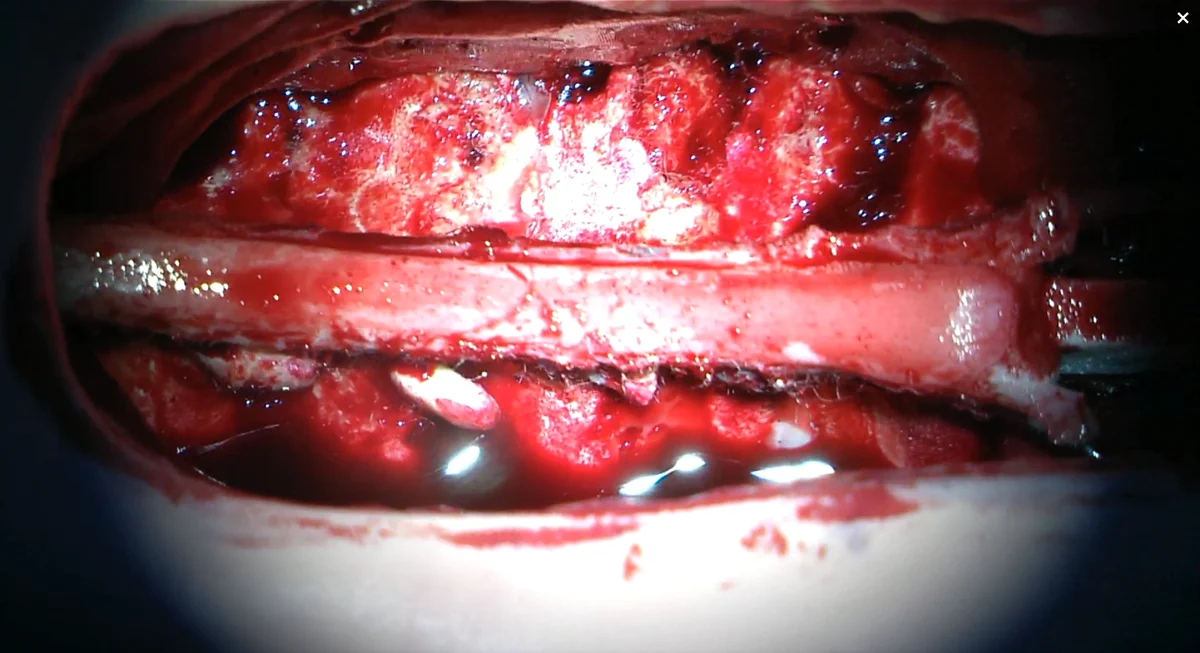
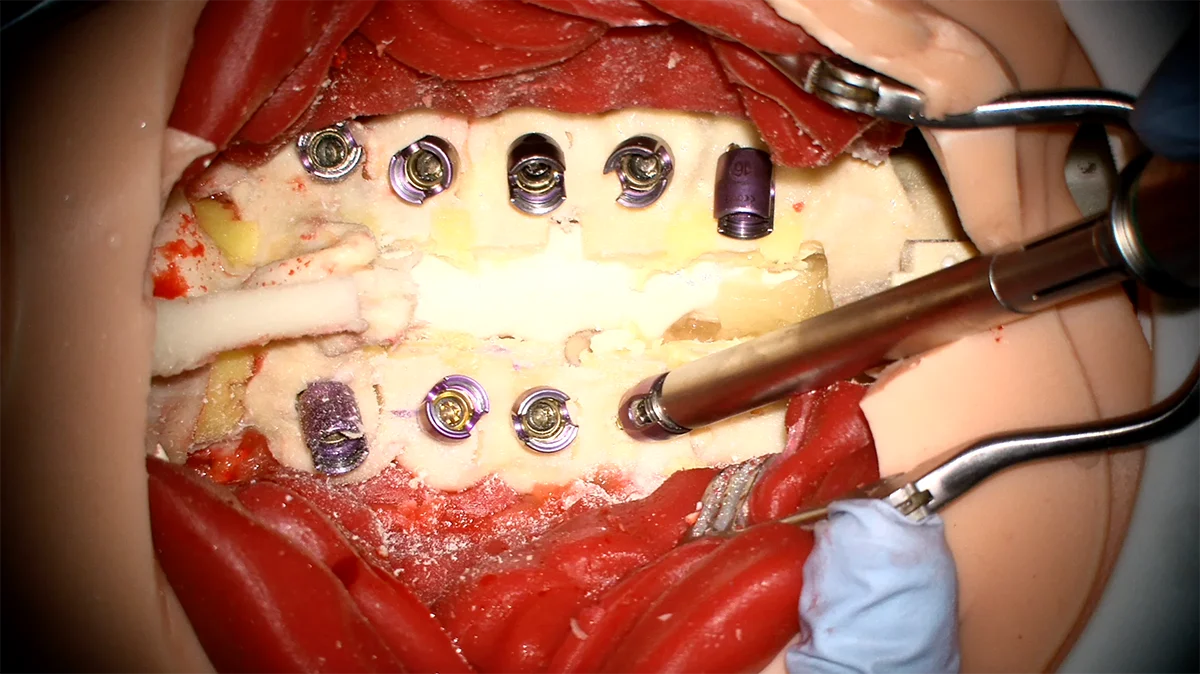
Every RealSpine model delivers precise tactile sensations that mirror real patient conditions.
Variable bone densities, ligament tension, and tissue resistance allow both learners and experts to refine skills, test instruments, and build confidence in challenging scenarios.
The UNIQUE COMPLETE realistic simulator portfolio for spine surgery
Click on each red number to explore our full simulator portfolio / Find the right simulator
How to navigate the RealSpine simulator portfolio
Each numbered simulator in the table corresponds to the numbered hotspots in the image above.
This overview helps you quickly identify which simulator matches your training needs based on region and surgical approach.
| # | Simulator | Spine Region | Main Training Focus | Typical Approaches | RealImaging Lite App | RealSmart Sensors |
|---|---|---|---|---|---|---|
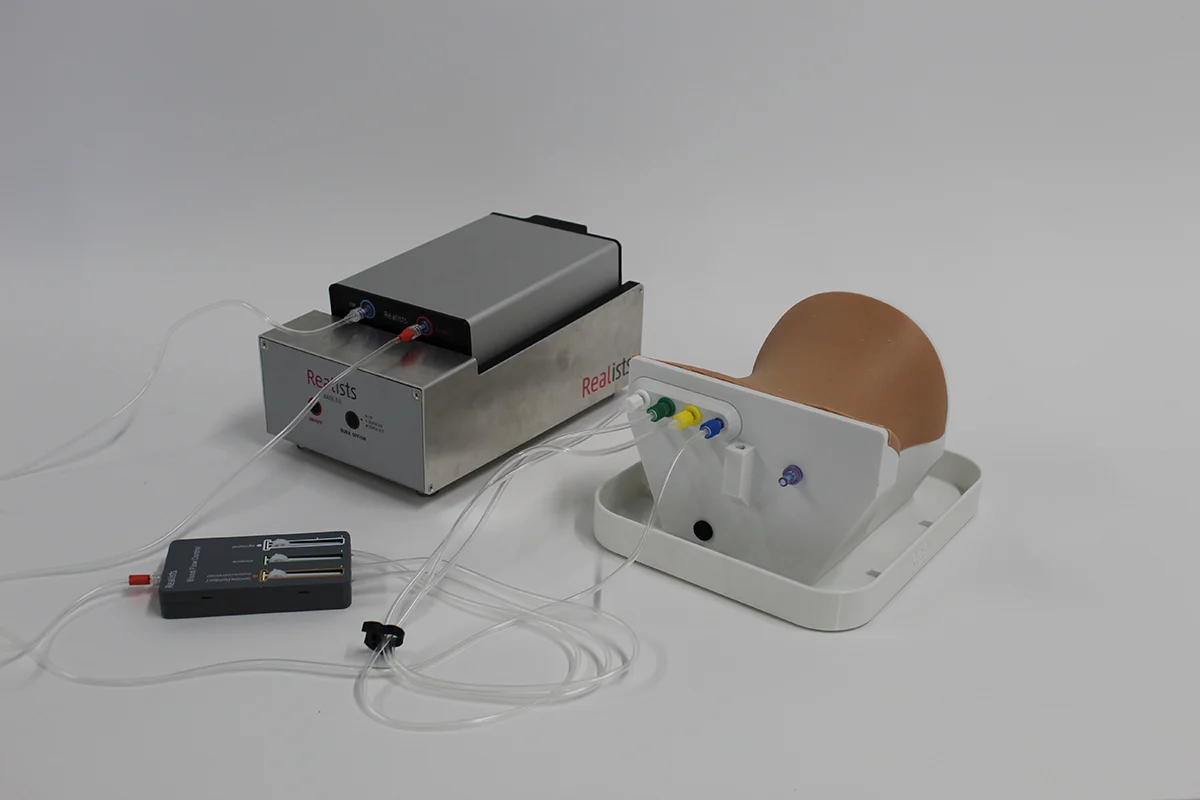
| 1 | RealSpine Advanced Myelopathy Posterior | Cervical / Upper Thoracic | Posterior cervical procedures, from initial exposure to fixation and closure. Integrates decompression techniques, multiple fixation systems, and procedural workflows with navigation and bleeding management. | Posterior | Optional | No |
| 2 | RealSpine Advanced Myelopathy Anterior | Cervical | It is used to train anterior cervical spine procedures—including decompression, fusion, corpectomy, and disc replacement—as well as the placement of anterior cervical plates with screws and cages. | Anterior cervical | Yes | No |
| 3 | RealSpine Advanced Deformity – Lenke 3 | Thoracic / Thoracolumbar | Deformity correction and complex alignment training | Posterior | Yes | No |
| 4 | RealSpine Basic MISS | Lumbar | It is designed for introductory training in MISS procedures in the lumbar region, specifically at the L4–L5 level, enabling practice of basic decompression through microscopic, exoscopic, and tubular endoscopic approaches. It is focused on training interlaminar, extraforaminal, and transforaminal accesses, as well as techniques such as discectomy, flavectomy, laminectomy, and bilateral decompression, within a realistic and reproducible simulation environment. | Posterior | Yes | No |
| 5 | RealSpine Advanced MISS | Lumbar | Advanced MISS techniques with two options: Option 1 (L4–L5 on the Lumbar Posterior System), integrating microscopic, exoscopic, and tubular endoscopic approaches for the management of herniated disc, stenosis, complex stenosis, and extraforaminal approaches; and Option 2 (L4–L5 + iliac crest on the Lumbar Endoscopy System (grey)), focused on endoscopic treatment of herniated disc and herniated disc with stenosis. | Posterior | Optional | No |
| 6 | RealSpine Basic SI | Sacroiliac | Sacroiliac joint access and fixation training | Percutaneous / Lateral | Yes | No |
| 7 | RealSpine Advanced Spondy Posterior | Lumbar | Degenerative spine surgery and posterior stabilization | Posterior | Optional | No |
| 8 | RealSpine Advanced Spondy Lateral | Lumbar | Lateral access and interbody fusion training | Lateral (XLIF / LLIF) | Yes | No |
| 9 | RealSpine Advanced Anterior Lumbar | Lumbar | Anterior lumbar access and disc procedures | Anterior (ALIF) | Yes | No |
| 10 | RealSpine Basic Endo | Lumbar | It is used to train lumbar endoscopic procedures in the L2–S1 region, enabling practice of basic decompression techniques such as discectomy, flavectomy, laminectomy, sequestrectomy, and bilateral decompression through endoscopic approaches, both uniportal and biportal. It is compatible with X-ray imaging and navigation systems. | Interlaminar, transforaminal, extraforaminal | Yes | Yes |
| 11 | RealSpine Basic Thoracolumbar Th1–S1 | Thoracolumbar | Open and hybrid spine approaches | Posterior / Open | Optional | No |
| 12 | RealSpine Basic Spondy X | Lumbar | Entry-level degenerative spine training | Posterior | Yes | No |
| 13 | RealSpine Basic Spondy | Lumbar | Core spondylosis procedures | Posterior | Optional | No |
| 14 | RealSpine Basic Spondy Trauma | Lumbar | Trauma-related stabilization techniques | Posterior | Optional | No |
* RealImaging Lite App availability depends on the training scenario and simulator configuration.
** RealSmart Sensors are currently integrated in selected endoscopic training models.
Not sure which simulator fits your training goals?
True-to-life surgical experience
High-quality spinal simulations with varied bone and tissue densities and textures that mimic real surgical scenarios.
Compatibility with real instruments
Supports the use of actual surgical instruments and equipment for a seamless transition from simulation to the operating room.
Patient-centered pathology
Simulates conditions based on real patient cases, providing an authentic experience for surgeons to prepare for diverse clinical situations.
Customizable training solution
Adaptable to specific procedures, surgeon preferences, or institutional requirements, offering tailored solutions for targeted training.
Portability and flexibility
Compact and easy to set up, allowing surgeons to train anytime, anywhere—perfect for both in-hospital practice and mobile setups.
All skill levels
Our RealSpine training simulators are catered to surgeons across all skill levels and budgets. Whether you're just starting out or are an experienced surgeon looking for advanced training tools, we have the RealSpine Basic and the RealSpine Advanced.
Discover your perfect fit!
RealSpine Basic vs RealSpine Advanced
Features
RealSpine Basic
RealSpine Advanced
Training Focus
Focuses on fundamental training to familiarize surgeons with basic surgical maneuvers and anatomy.
Offers a more realistic and intricate experience, ideal for complex procedures where precision and problem-solving are required.
Haptic Feedback
Provides basic haptic feedback that mimics essential sensations like bone and tissue resistance.
Delivers advanced haptic feedback, simulating a wider range of physical sensations, such as detailed tissue variations.
Complication Management
Provides basic haptic feedback that mimics essential sensations like bone and tissue resistance.
Delivers advanced haptic feedback, simulating a wider range of physical sensations, such as detailed tissue variations.
Dura Suture Procedures
Not included in the basic model.
Supports dura suture procedures for surgeons training on advanced spinal techniques.
Modularity for Cost-Effective Training
Basic models focused on essential procedures with limited modularity.
Offers modularity, enabling different procedure configurations and enhancing cost-effective training through interchangeable components.
Need More:
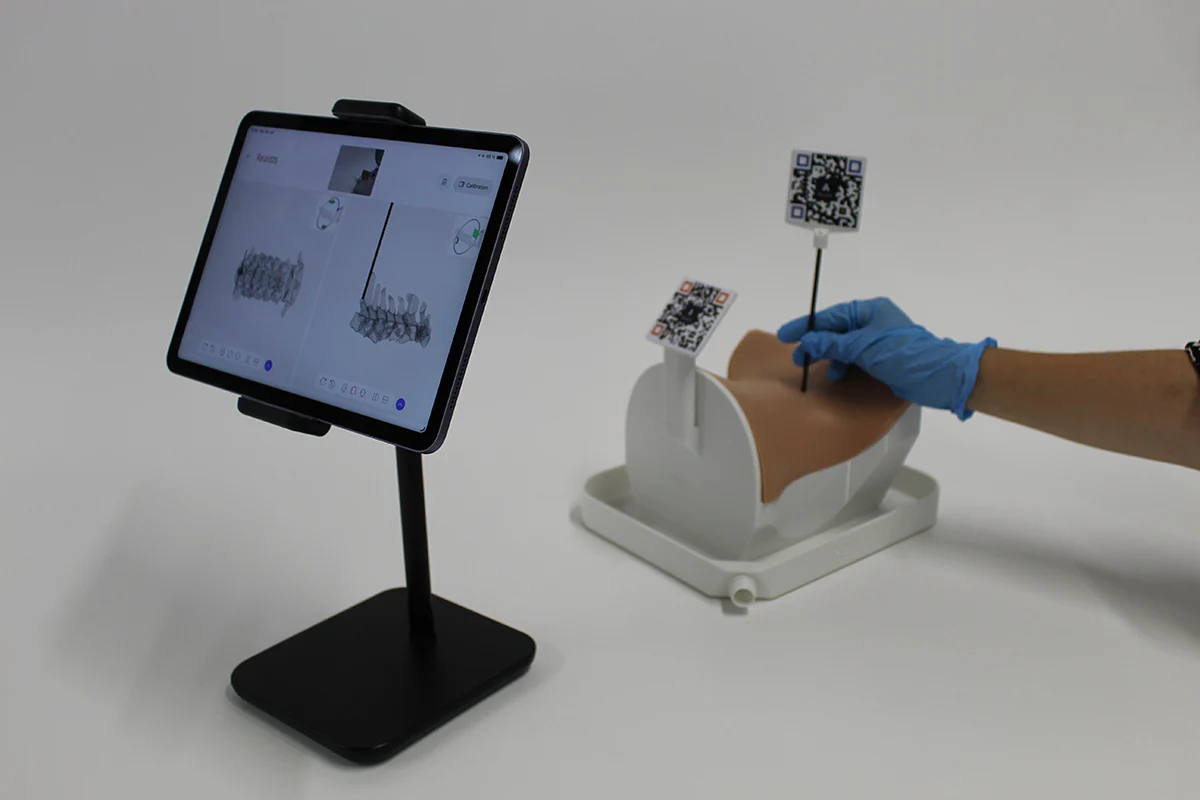
Complete training with RealImaging
Radiation-free X-Ray simulation for surgical training with RealSpine.